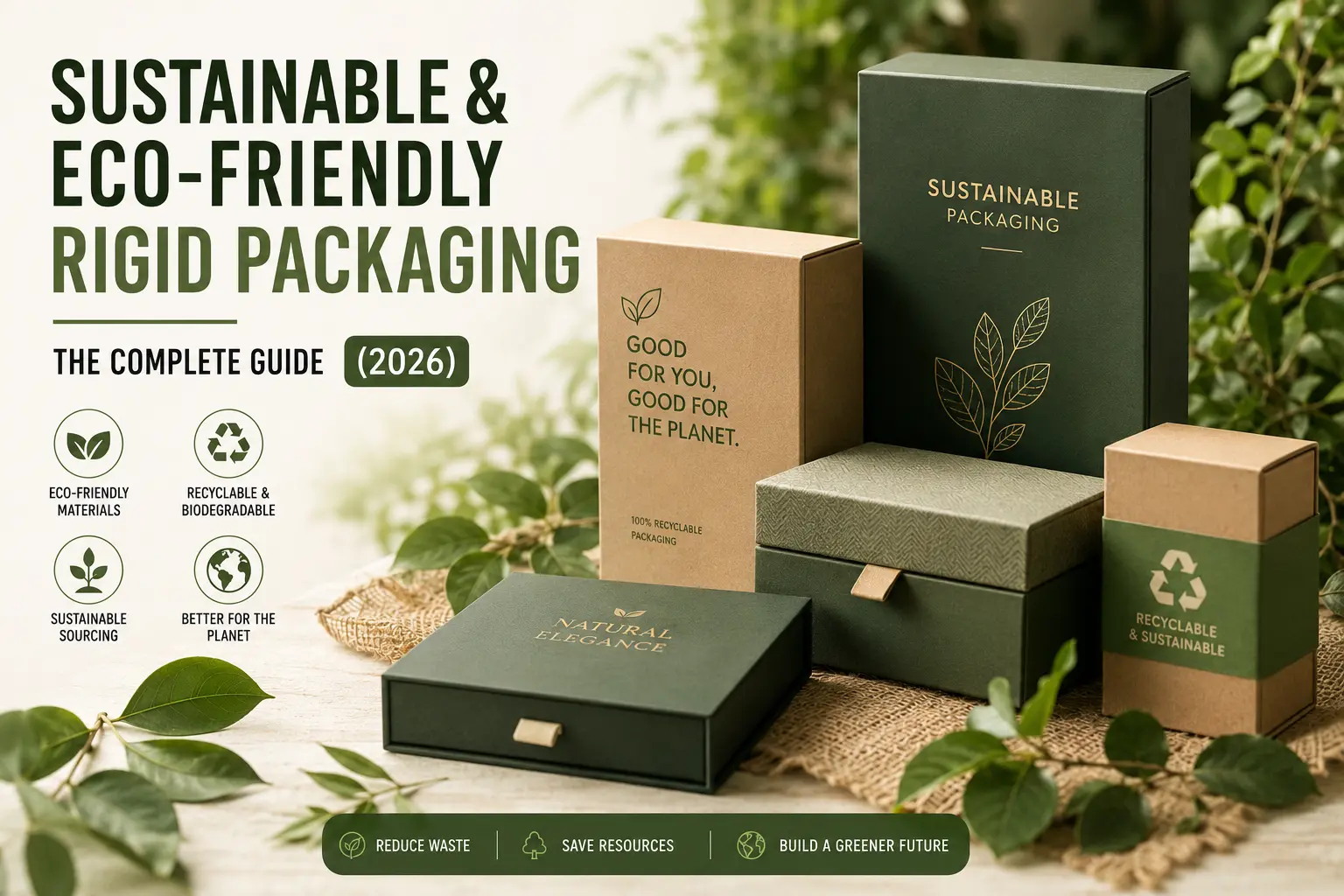
Sustainability is no longer a “nice to have” in packaging it’s a purchase driver. Shoppers actively look for recyclable, low-waste, and responsibly sourced boxes, and brands that ignore this end up losing shelf appeal and repeat customers. This guide breaks down what actually makes rigid packaging sustainable, which materials and finishes to choose, and how to build an eco-friendly rigid box program without sacrificing the premium unboxing experience your customers expect.
What Makes Rigid Packaging “Sustainable”?
Sustainable rigid packaging isn’t a single material or certification it’s a combination of four factors:
- Material sourcing recycled content or FSC-certified virgin fiber
- Recyclability / biodegradability can the box be recycled curbside or composted after use?
- Finishing choices coatings, inks, and laminates that don’t contaminate the recycling stream
- Production waste die-cutting efficiency, plate reuse, and minimal offcuts
A rigid box that looks “kraft” or “natural” isn’t automatically eco-friendly the lamination, foil stamping, and adhesives used on it often are what determine whether it’s actually recyclable.
Sustainable Rigid Box Materials Compared
| Material | Sustainability Profile | Recyclable? | Best For |
|---|---|---|---|
| Recycled Chipboard (Greyboard) | High recycled content, low virgin fiber use | Yes | Everyday rigid boxes, structural core |
| Kraft Paperboard | Unbleached, minimal processing | Yes | Natural/organic brand positioning |
| FSC-Certified Paperboard | Responsibly sourced virgin fiber | Yes | Brands needing certification claims |
| Molded Pulp Inserts | Biodegradable, compostable | Yes (compostable) | Replacing foam/plastic inserts |
| Standard Laminated Rigid Board | Lower plastic film complicates recycling | Limited | Only when eco-claims aren’t a priority |
For a deeper breakdown of board types and structural performance, see our Rigid Box Materials Guide, and pair material choice with the right wall strength using our Rigid Box Thickness & Wall Strength Guide.
Eco-Friendly Finishing Options
| Finish | Eco Impact | Recommendation |
|---|---|---|
| Water-Based Coating | Low VOC, recyclable | Preferred over plastic lamination |
| Soy or Vegetable-Based Ink | Biodegradable, low toxicity | Recommended for all print work |
| Matte/Gloss Plastic Lamination | Slows or blocks recyclability | Use only when durability is critical |
| Foil Stamping | Small amounts have limited impact; heavy foil coverage reduces recyclability | Use sparingly, as an accent |
| Embossing/Debossing | No added material a purely mechanical finish | Best eco-friendly way to add texture |
See our full Rigid Box Finishing Options Guide for how each finish affects cost, durability, and shelf appeal.
Sustainable Rigid Boxes vs. Folding Cartons
Rigid boxes are inherently more durable and reusable than folding cartons, which extends their functional life a customer is far more likely to keep and reuse a sturdy rigid box than a thin folding carton, reducing single-use waste. That said, folding cartons use less material per unit and are lighter to ship, which lowers transport emissions. Our Rigid Box vs. Folding Carton comparison breaks down the full cost, durability, and use-case differences so you can weigh sustainability against your product’s shipping and reuse profile.
Common Sustainable Rigid Box Types
| Box Style | Sustainable Material Options | Typical Use Case |
|---|---|---|
| Two-Piece Rigid Boxes | Recycled chipboard, kraft wrap | Gifting, retail |
| Collapsible/Foldable Rigid Boxes | Recycled board (reduces shipping footprint) | E-commerce, subscription boxes |
| Magnetic Closure Boxes | FSC board with fiber-based magnet backing | Cosmetics, jewelry, electronics |
| Drawer-Style Boxes | Kraft or recycled chipboard | Candles, apparel |
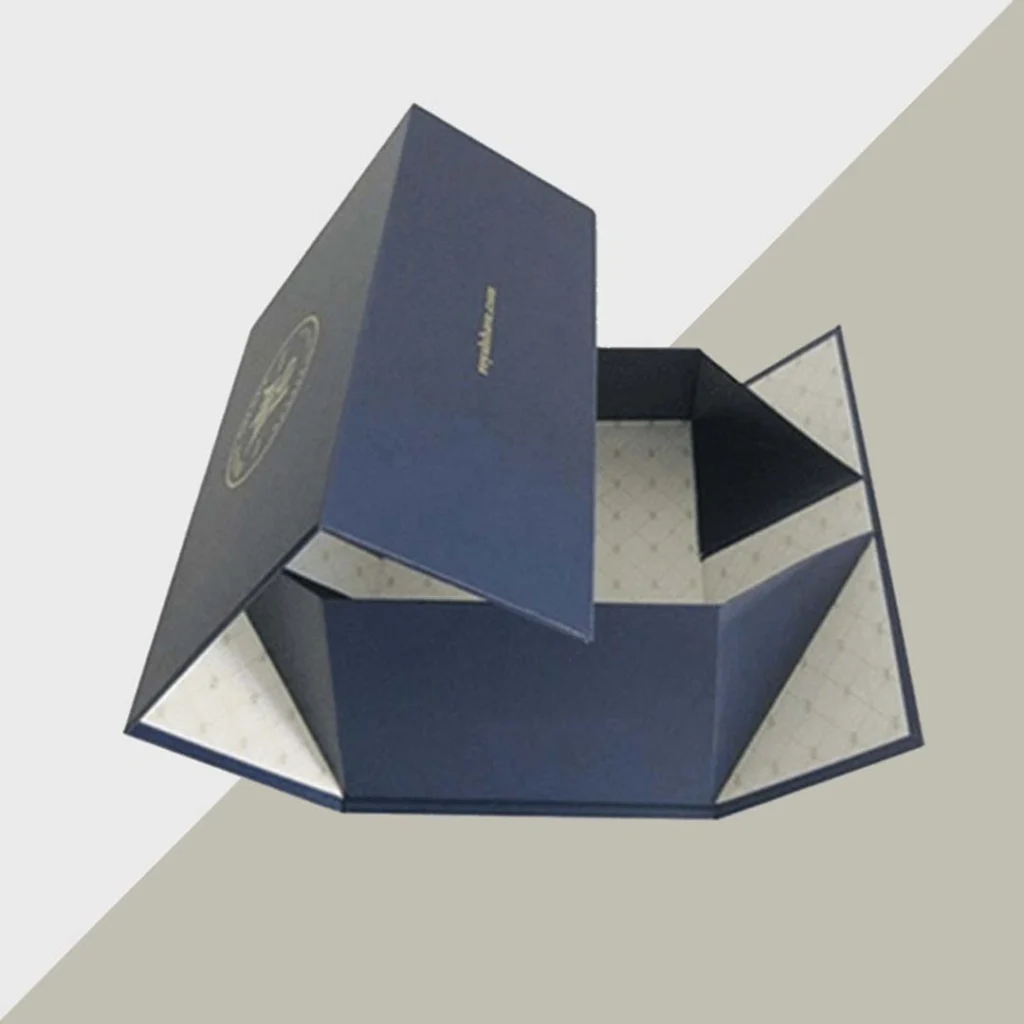
| Book-Style/Flip-Top Boxes | FSC-certified board, molded pulp trays | Premium gift sets |
Why Choose Rigid Packaging Pro for Eco-Friendly Boxes
- Free US shipping on all orders
- Free design support to optimize material use and reduce waste
- No die or plate charges lower barrier to trying sustainable materials
- 100-unit MOQ, so small and growing brands can test eco packaging affordably
- 24/7 support and prototype approval before full production
Frequently Asked Questions
Is rigid packaging recyclable?
Yes, most rigid boxes made from chipboard or kraft paperboard are recyclable, though heavy plastic lamination or foil coverage can reduce recyclability.
What is the most eco-friendly rigid box material?
Recycled chipboard and FSC-certified kraft paperboard are the most widely used eco-friendly options, offering strength with a lower environmental footprint.
Are laminated rigid boxes bad for the environment?
Plastic-film lamination makes boxes harder to recycle, but water-based coatings offer similar protection with far less environmental impact.
Can rigid boxes be biodegradable?
Uncoated or minimally coated paperboard rigid boxes can biodegrade, and molded pulp inserts used inside them are compostable.
Does sustainable packaging cost more?
Material costs can be similar to standard board, though certified or specialty eco-materials sometimes carry a modest premium depending on order volume.
Ready to Switch to Sustainable Rigid Packaging?
Our team can help you choose the right recycled or FSC-certified materials, eco-friendly finishes, and box style for your product with free design support and no plate charges. Call us at +1-718-395-8979 or email info@rigidpackagingpro.com to get started.