
If your product feels flimsy the moment a customer picks up the box, no amount of pretty printing will fix that first impression. Rigid box thickness sometimes called wall strength or board caliper is the single biggest factor separating a box that feels premium from one that feels cheap. Get it wrong and you either overpay for board you didn’t need, or underpay and end up with crushed corners, warped lids, and returns.
This guide breaks down exactly how rigid box thickness works, how to match it to your product, and what the industry standards actually mean in practice.
What “Rigid Box Thickness” Actually Means
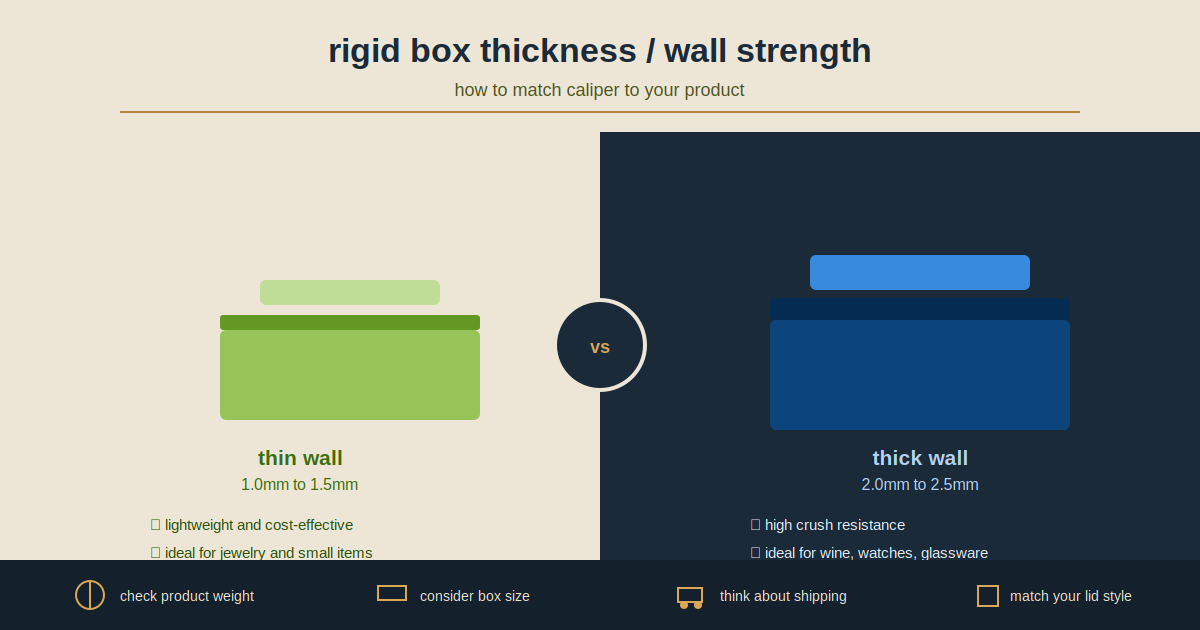
Rigid boxes are built around a solid paperboard core called chipboard, measured in caliper (thickness, usually in millimeters or points) rather than the GSM/weight measurement used for folding cartons. A thicker caliper means a stiffer wall, more crush resistance, and a heavier overall box but thickness alone doesn’t determine strength. Wall construction, wrap material, and corner reinforcement all play a role too.
| Chipboard Caliper | Approx. Thickness | Feel | Best For |
|---|---|---|---|
| 1.0mm – 1.2mm | Light | Firm but flexible | Small jewelry boxes, gift cards, lightweight cosmetics |
| 1.5mm | Standard | Solid, common industry default | Candles, perfume, mid-weight cosmetics, apparel |
| 2.0mm | Heavy | Very rigid, minimal flex | Watches, electronics, glassware, premium gift sets |
| 2.5mm+ | Extra Heavy | Near-solid, high crush resistance | Wine/spirit bottles, large hampers, shipping-grade rigid mailers |
Factors That Determine the Right Thickness
Product Weight
Heavier products need thicker walls and stronger base support to avoid sagging or splitting at the seams over time. A 1.5mm box that’s perfect for a candle will struggle under a bottle of wine.
Box Size
Larger boxes need thicker board even for lightweight products, since a bigger surface area flexes more easily. A large but shallow box in thin board will bow in the middle.
Shipping vs. Retail Display
Boxes that travel through a fulfillment network need thicker walls and reinforced corners to survive stacking and transit pressure. A box that only lives on a retail shelf can go lighter.
Lid Style
Two-piece and shoulder-neck lids rely on wall thickness for a snug, satisfying “click” fit. Too thin, and the lid feels loose; too thick, and it can feel stiff to open.
5Wrap Material
Textured paper, linen, and specialty wraps add a small amount of rigidity on top of the chipboard core, which can let you drop a caliper size while keeping the same felt strength.
Rigid Box Thickness by Product Category
| Product Type | Recommended Caliper | Why |
|---|---|---|
| Jewelry & small accessories | 1.0mm – 1.5mm | Light product weight, focus on a tight, precise fit |
| Candles | 1.5mm – 2.0mm | Moderate weight, needs to resist heat-related warping |
| Cosmetics & skincare | 1.5mm | Balances shelf presence with cost efficiency |
| Perfume & fragrance | 1.5mm – 2.0mm | Glass bottles need crush protection during transit |
| Watches | 2.0mm | Structured shape must hold under repeated opening/closing |
| Wine & spirits | 2.5mm+ | High product weight, needs strong base and corner support |
| Apparel & gift sets | 1.5mm – 2.0mm | Larger surface area needs extra rigidity to avoid bowing |
Rigid Box vs. Folding Carton: Why Thickness Matters More Here
Folding cartons are measured in GSM and rely on fold lines and glue joints for structure, so their strength comes largely from the board weight itself. Rigid boxes are built differently a chipboard core is wrapped in a decorative material, which is why caliper and wall construction matter more than weight alone. If you’re still deciding which box style fits your product, our breakdown of Rigid Box vs Folding Carton covers the structural and cost differences in more detail.

Common Mistakes to Avoid
- Over-speccing thickness “to be safe”: drives up cost and shipping weight without adding real protection for lightweight products.
- Under-speccing for a large box: even a light product needs thicker walls once the box footprint grows, or the panels will flex and warp.
- Ignoring the lid-to-base ratio: a lid that’s a different caliper than the base can create an uneven, loose-fitting close.
- Skipping a prototype: caliper feels very different in a 3D sample than on a spec sheet always test before a full production run.
How Rigid Packaging Pro Helps You Choose
Every custom quote includes guidance on the right caliper for your product, box size, and shipping method at no extra cost. With free US shipping, free design support, no die or plate charges, a 100-unit MOQ, and prototype approval before full production, you can test a thickness before committing to a full order. Our team is available 24/7 to help you specify the right build.
Have questions about wall strength for your specific product? Call us at +1-718-395-8979 or email info@rigidpackagingpro.com for a free consultation.

Frequently Asked Questions
What is the standard thickness for a rigid box?
Most rigid boxes use 1.5mm chipboard as the industry standard, offering a solid, premium feel for mid-weight products like cosmetics, candles, and apparel.
Does a thicker rigid box always mean better quality?
No. Thickness should match the product’s weight and size an over-thick box adds unnecessary cost and shipping weight, while a well-matched caliper gives the best balance of protection and value.
What thickness do I need for shipping fragile items like glass or wine bottles?
Fragile or heavy items like wine, spirits, and glassware typically need 2.0mm to 2.5mm+ board along with reinforced corners for adequate crush resistance during transit.
Can I test box thickness before ordering in bulk?
Yes. We recommend approving a physical prototype before full production so you can feel the wall strength and lid fit firsthand, not just review it on a spec sheet.
Does wrap material affect how thick the box needs to be?
Yes. Textured or specialty wrap materials add a small amount of extra rigidity, which can sometimes let you use a slightly thinner chipboard core while keeping the same overall strength.