
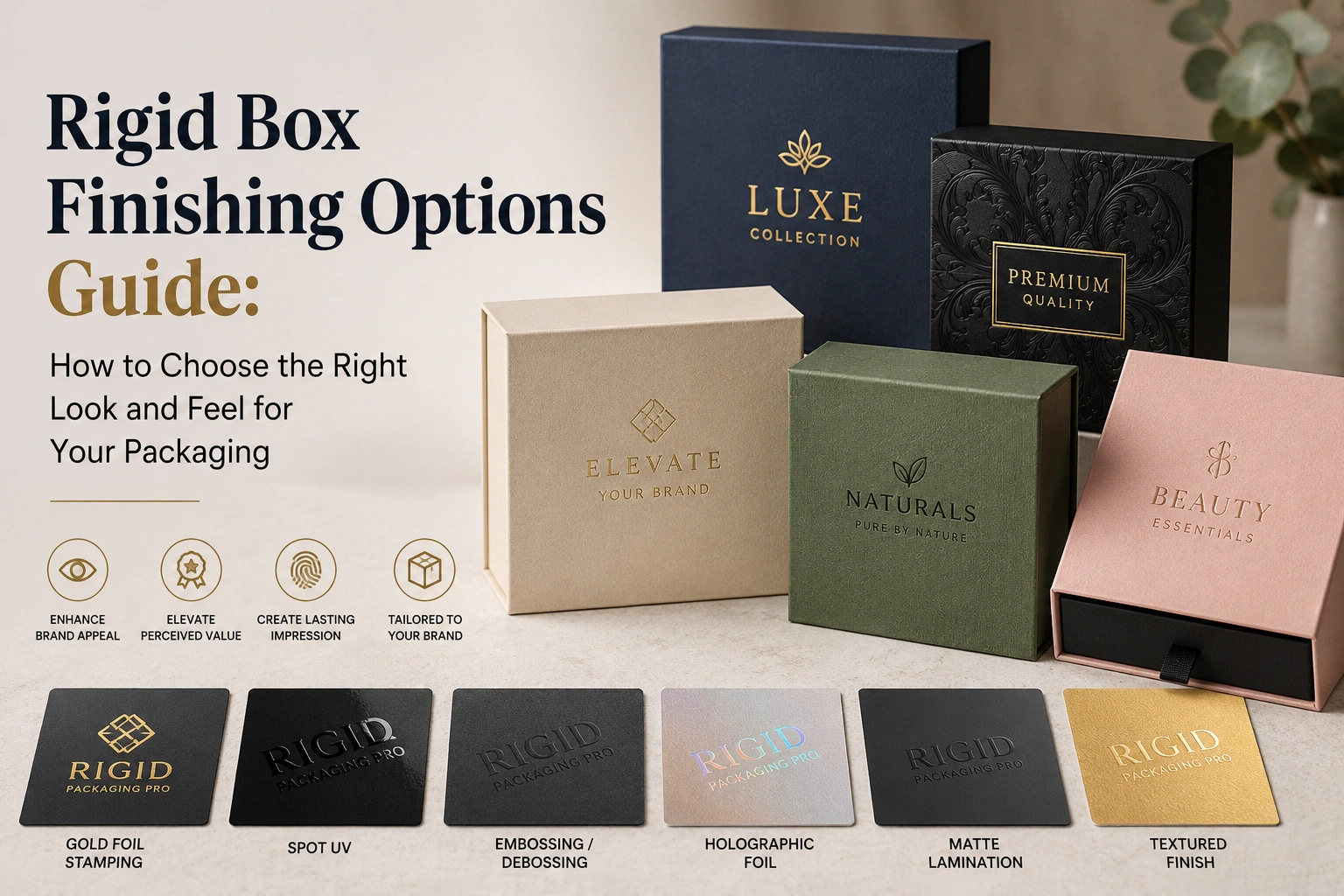
When most brands start designing custom rigid boxes, they focus on size, wall strength, and board material. But the finish the coating, texture, and printing technique applied to the outer surface is what actually gets touched, photographed, and remembered. Two boxes made from the exact same chipboard core can feel completely different in a customer’s hands depending on the finish applied to them.
This guide breaks down every major rigid box finishing option, when to use each one, and how to combine finishes without driving your per-unit cost through the roof.
Why Finishing Matters More Than Most Brands Realize
A rigid box’s finish does three jobs at once:
- Protects the print coatings and laminates guard ink and color against scuffing, moisture, and fingerprints during shipping and handling.
- Signals positioning a soft-touch matte laminate reads “premium skincare,” while a glossy UV-coated finish reads “bold, energetic, mass-market.”
- Drives unboxing experience foil stamping, embossing, and spot UV are the details customers photograph and share on social media.
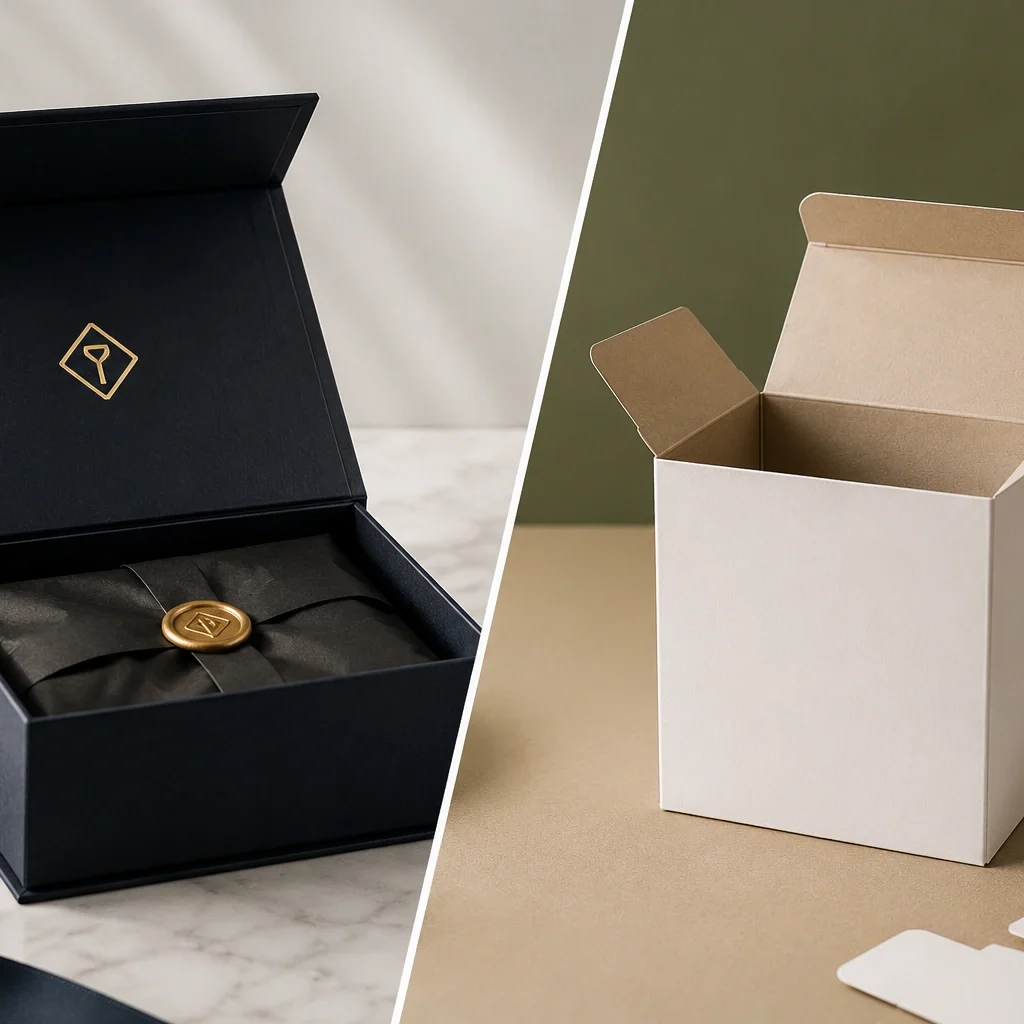
If you’ve already compared rigid boxes against folding cartons, you know rigid boxes already carry more perceived value out of the gate. The right finish is what pushes that perception from “nice packaging” to “luxury packaging.”
Lamination Finishes
Lamination is the base layer most rigid boxes start with a thin plastic or paper film applied over the printed board.
Matte Lamination
A non-reflective, soft-finish film that reduces glare and gives the box a muted, sophisticated look. It’s the most requested finish for luxury rigid boxes, cosmetics, and candle packaging because it photographs well under studio lighting without hot spots.
Gloss Lamination
A shiny, reflective film that makes colors pop and print look sharp. Gloss is a strong fit for food packaging, electronics, and retail boxes competing for attention on a shelf.
Soft-Touch (Suede) Lamination
A velvety, almost fabric-like coating that’s become the signature finish for high-end jewelry rigid boxes and fragrance packaging. It’s more expensive than standard matte or gloss but delivers a tactile “unboxing moment” that’s hard to replicate with print alone.
Foil Stamping
Foil stamping presses metallic or pigmented foil onto the board using a heated die, most commonly for logos, brand names, or decorative borders. Gold and rose gold foil are the go-to choices for luxury and bridal packaging, while silver and black foil work well on tech and men’s grooming products. Foil stamping pairs especially well with matte lamination, since the contrast between the flat matte surface and the reflective foil makes the branding pop without needing extra color.
Embossing and Debossing
Embossing raises a design above the surface of the box; debossing presses it below. Both are done with a custom metal die and add a physical, three-dimensional texture customers can feel not just see. Embossing is popular for logos and brand marks on rigid gift boxes and presentation boxes, and it’s frequently combined with foil stamping (called “foil emboss”) for a finish that catches both light and touch.
Spot UV Coating
Spot UV applies a glossy, raised coating to specific areas of an otherwise matte box usually a logo, pattern, or key graphic. The contrast between the flat matte background and the glossy raised spot creates visual depth without the added cost of a full embossing die. It’s a popular middle-ground finish for brands that want a premium look but aren’t ready for full embossing tooling costs.
Screen Printing
Rather than offset or digital printing under a laminate, screen printing applies ink directly onto the finished rigid box surface, layer by layer. It’s especially common on collapsible and magnetic-closure boxes where a laminate-and-print sandwich isn’t practical, and it holds up well on textured or specialty papers like kraft and linen stock covered in our materials guide.
Closures and Structural Finishing Details
Finishing isn’t only about the surface how the box opens and closes is part of the experience too:
- Ribbon pulls a satin or grosgrain ribbon used to lift product out of a base, common on two-piece and drawer-style boxes.
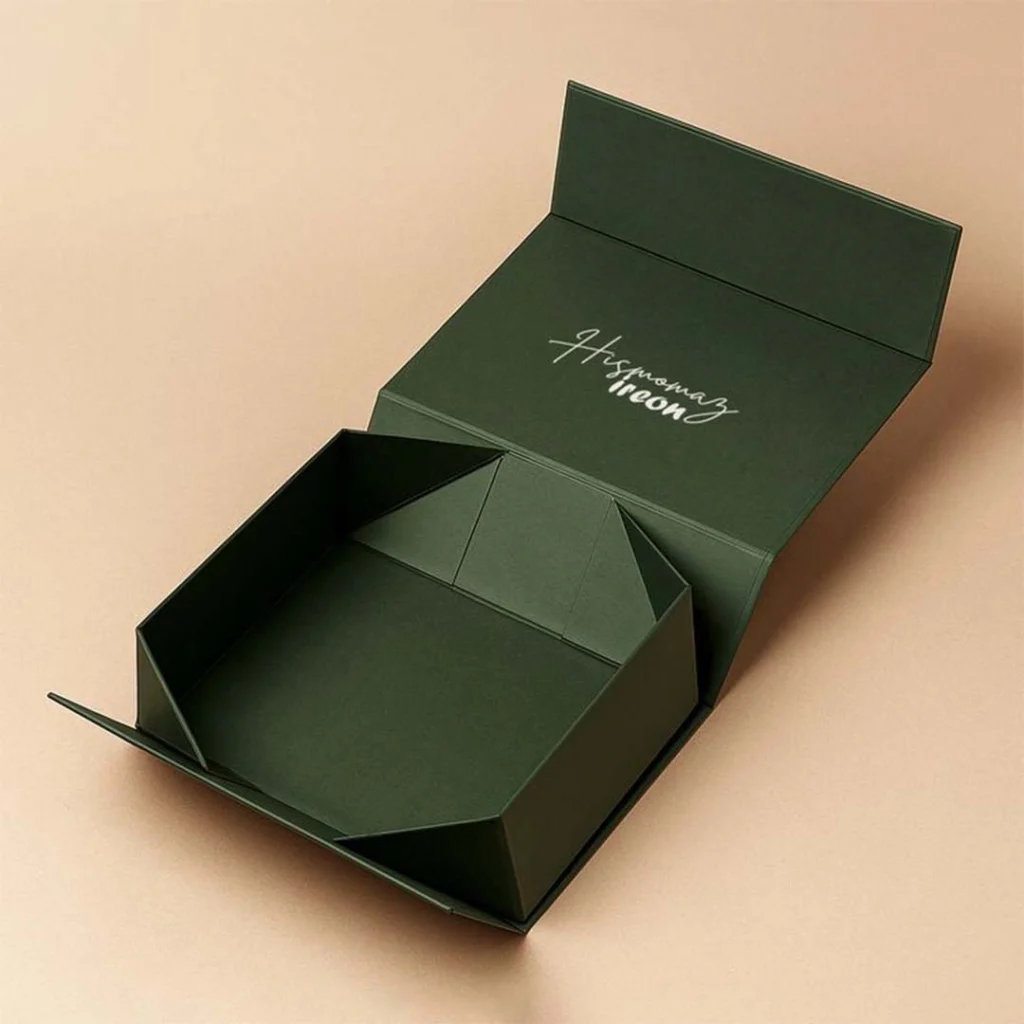
- Magnetic closures magnets embedded in the flap and base of the box for a satisfying “snap” close, standard across the magnetic closure box line.
- Grosgrain or elastic ribbon ties used on book-style and flip-top boxes to hold the lid shut without magnets.
- Edge painting coloring the exposed board edges around the lid, a detail luxury brands use to keep raw chipboard edges from showing.
Matching Finish to Product Category
| Product Type | Recommended Finish | Why It Works |
|---|---|---|
| Jewelry & watches | Soft-touch lamination + foil stamp | Tactile luxury feel, brand mark catches light |
| Cosmetics & skincare | Matte lamination + spot UV | Clean, premium look with subtle brand accent |
| Candles | Matte lamination + embossed logo | Muted background, felt texture on shelf and in hand |
| Food & bakery | Gloss lamination + full-color print | Vibrant, appetite-appealing color reproduction |
| Electronics & tech | Matte or gloss lamination + silver foil | Sharp, modern, precision feel |
| Gift & seasonal boxes | Gloss or matte + ribbon closure | Festive, giftable presentation without high tooling cost |
If you’re still deciding on the underlying board first, our rigid box thickness and wall strength guide is a good starting point the finish sits on top of that structural decision, not the other way around.
Cost Considerations
Finishing cost typically scales in this order, from most affordable to most premium:
- Gloss or matte lamination (baseline)
- Spot UV coating
- Foil stamping
- Embossing/debossing
- Combined finishes (foil emboss, soft-touch + foil, etc.)
Because there are no die or plate charges and a 100-unit minimum order quantity on custom rigid boxes, brands can test a premium finish like soft-touch or foil stamping at small scale before committing to a full production run.
Frequently Asked Questions
What is the most popular finish for luxury rigid boxes?
Soft-touch (suede) lamination combined with foil stamping is the most requested finish for luxury rigid boxes, especially in jewelry, fragrance, and bridal packaging.
Can I combine multiple finishing techniques on one box?
Yes. Common combinations include matte lamination with spot UV, matte lamination with foil stamping, and foil-embossed logos over soft-touch laminate. Combining finishes increases cost but is common on premium packaging lines.
Does finishing affect the strength of a rigid box?
Lamination adds a small amount of surface durability and moisture resistance, but overall box strength comes primarily from the board thickness and wall construction, not the finish.
Is spot UV the same as gloss lamination?
No. Gloss lamination coats the entire box in a reflective film, while spot UV applies a glossy raised coating only to specific design elements over a matte background.
What’s the most budget-friendly finish for a first production run?
Standard matte or gloss lamination is the most cost-effective option and still gives a clean, professional finish ideal for testing a product line before investing in foil stamping or embossing.
Not sure which finish fits your product? Contact our packaging team at +1-718-395-8979 for free design support and a sample recommendation no die or plate charges, 100-unit minimum order quantity.