
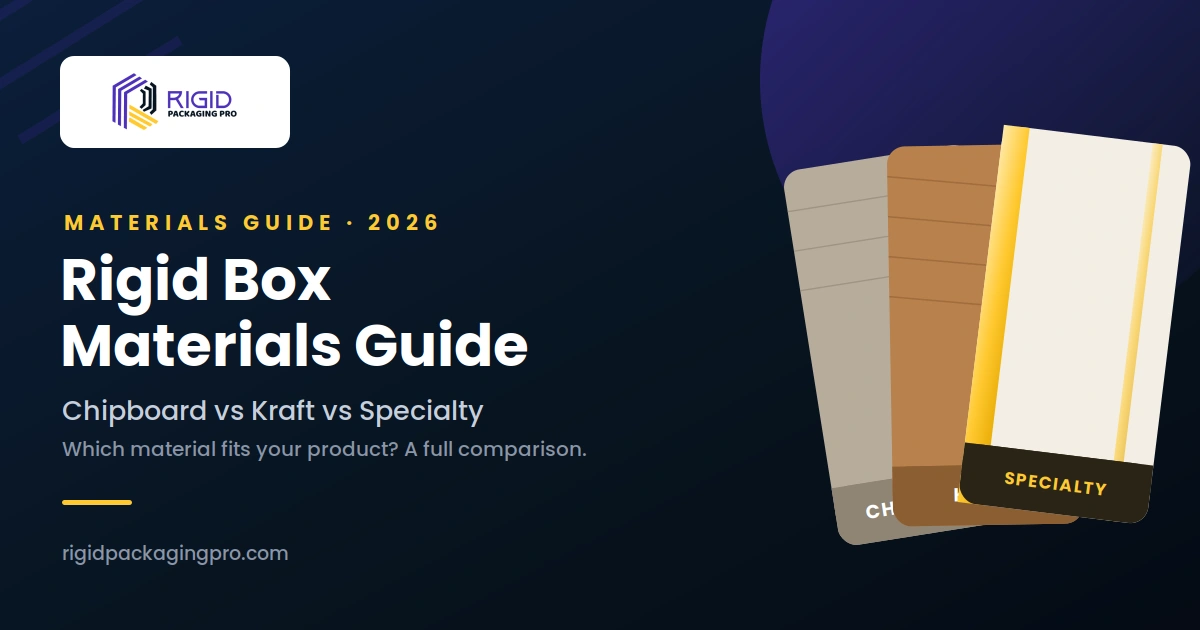
Not all rigid boxes are built the same and the material you choose determines everything from shelf presence to unboxing durability. Brands searching for custom rigid boxes are often surprised to learn that “rigid packaging” isn’t one material at all. It’s a category that spans dense chipboard, natural kraft board, and a wide range of specialty materials like textured paper, velvet wrap, and metallic laminates.
This guide breaks down the three core rigid box materials categories, compares their thickness, strength, cost, and sustainability profiles, and helps you match the right material to your product, brand positioning, and budget.
What Makes a Box “Rigid”? A Quick Primer
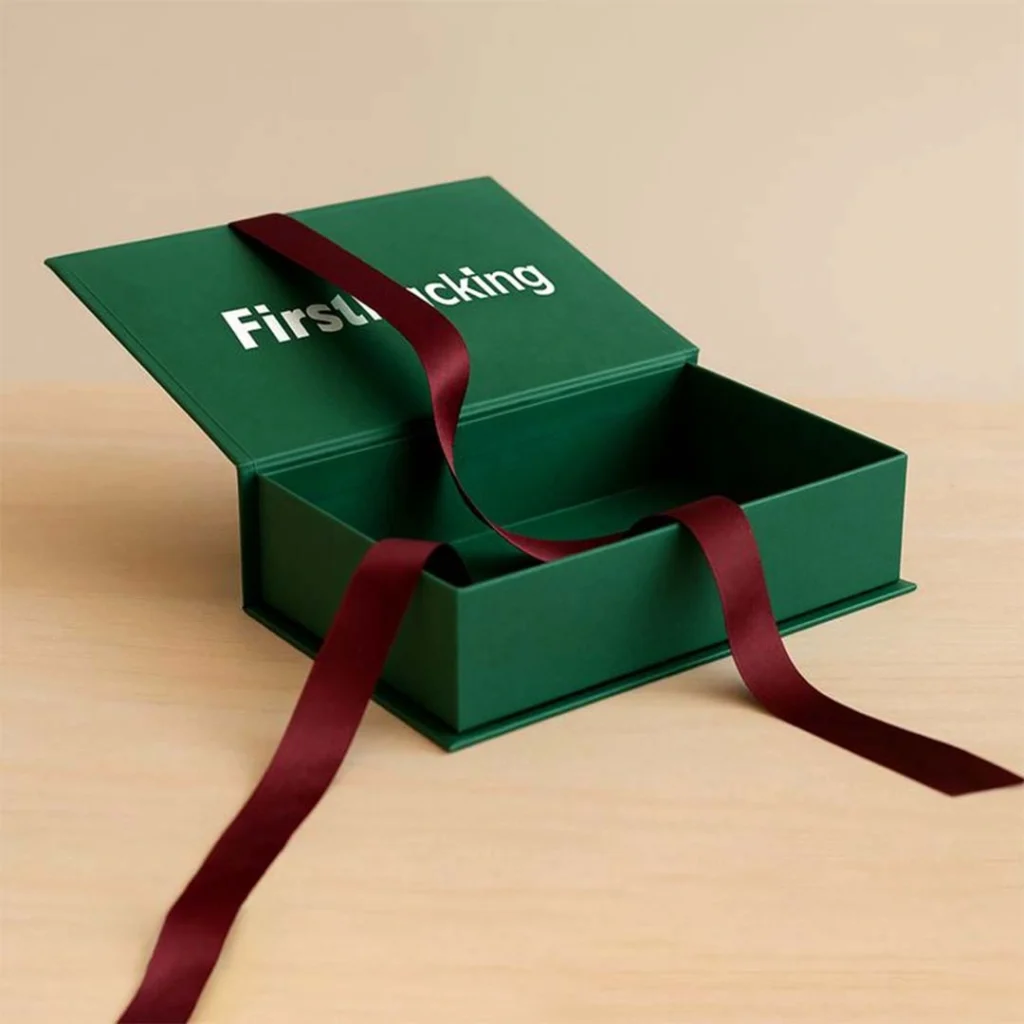
A rigid box is built around a solid paperboard core typically 1.5mm to 3mm thick that holds its shape without folding flat, unlike standard folding cartons. That solid core is then wrapped in an outer material, which is where chipboard, kraft, and specialty finishes come into play.
Two layers define a rigid box:
- The core (structure): Almost always high-density grey chipboard, measured in GSM or millimeter thickness. This determines rigidity, crush resistance, and how the box feels in hand.
- The wrap (finish): The visible surface kraft paper, coated art paper, textured stock, velvet, leatherette, or metallic film which determines the visual and tactile brand experience.
Understanding this two-layer system is the key to understanding the “chipboard vs kraft” comparison people search for because chipboard is almost always the core, while kraft is almost always the wrap. Specialty materials, meanwhile, usually replace or embellish the wrap layer.
Chipboard: The Structural Backbone of Rigid Packaging
What it is: Chipboard (also called grey board or greyboard) is a dense, recycled paperboard made by compressing layers of reclaimed fiber. It’s the internal skeleton of nearly every rigid box, regardless of what outer material is used.
Key characteristics:
- Thickness typically ranges from 1.5mm to 3mm (1200–2000 GSM equivalent)
- High crush resistance and dimensional stability
- Naturally grey/brown and not usually printed on directly
- Made largely from recycled paper fiber
- Low cost relative to virgin paperboard
Best use cases: Jewelry rigid boxes, cosmetic boxes, watch boxes, custom rigid gift boxes, and any product needing a sturdy, self-supporting shape rather than a folding carton.
Limitations: Chipboard alone has a raw, unfinished look and needs a wrap material (kraft, art paper, specialty stock) for branding, print, and finish quality.
Kraft Rigid Boxes: Natural, Sustainable, On-Trend
What it is: Kraft refers to an unbleached or lightly bleached paper made through the kraft pulping process, prized for its natural brown tone, visible fiber texture, and strength-to-weight ratio. In rigid packaging, kraft is typically used as the wrap layer over a chipboard core, though lightweight kraft-only mailers also exist for non-rigid use.
Key characteristics:
- Natural, earthy brown or white-kraft finish
- GSM typically 80–150 for wrap paper
- Strong tear resistance for its weight
- Reads as “eco-friendly” and minimalist to consumers
- Print quality is slightly more muted than coated art paper (softer color reproduction)
Best use cases: Sustainable and organic brands, food and beverage packaging, artisanal or handmade product lines, brands leaning into a rustic or minimalist identity.
Limitations: Kraft’s natural texture limits vibrant, high-gloss printing brands wanting bold color-accurate branding often prefer coated art paper or specialty laminates instead.
Specialty Materials: Where Rigid Packaging Becomes a Luxury Experience
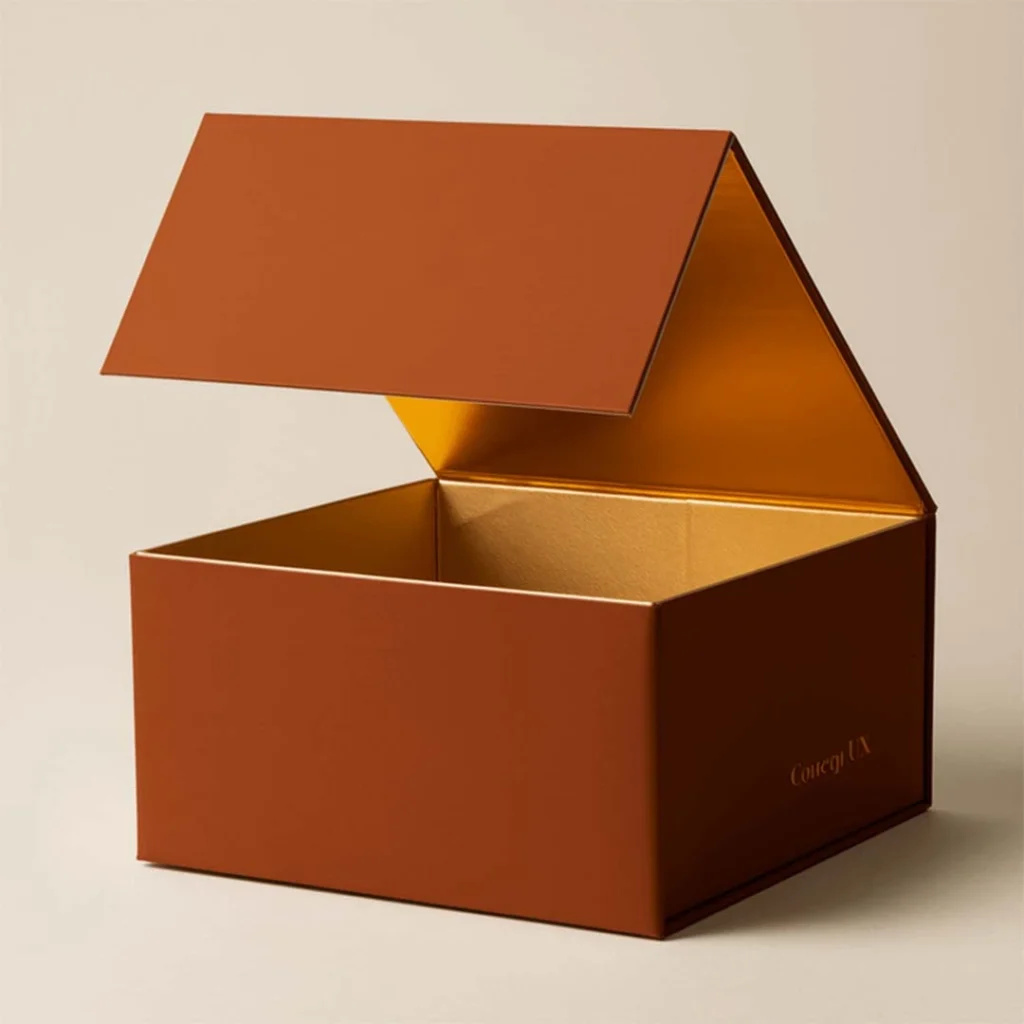
“Specialty” isn’t one material it’s a category of premium wrap finishes applied over a chipboard core to elevate texture, shine, and tactile impression. Common specialty options include:
| Specialty Material | Look & Feel | Common Use Case |
| Velvet wrap | Soft, plush, matte texture | Jewelry, watches, premium cosmetics |
| Leatherette | Textured, leather-like finish | Perfume, corporate gifting, accessories |
| Metallic/foil laminate | High-shine, reflective | Luxury gifting, limited editions |
| Textured/linen paper | Subtle embossed grain | Stationery, premium retail |
| Soft-touch (matte laminate) | Velvety, fingerprint-resistant | Cosmetics, electronics, subscription boxes |
| Embossed/debossed art paper | Raised or recessed detail | Branded gift sets, premium unboxing |
Best use cases: High-end retail, luxury gifting, jewelry, cosmetics, and any brand where the unboxing moment is part of the product experience.
Limitations: Specialty wraps carry the highest per-unit cost and typically require higher minimum order quantities from most suppliers to be cost-efficient though not with all providers (more on that below).
Chipboard vs Kraft vs Specialty: Side-by-Side Comparison
| Attribute | Chipboard (Core) | Kraft (Wrap) | Specialty (Wrap) |
| Role in box | Structural core | Natural finish wrap | Premium finish wrap |
| Typical thickness | 1.5mm–3mm | 80–150 GSM | 100–250 GSM + laminate |
| Visual style | Raw, industrial | Earthy, minimalist | Luxury, tactile |
| Print vibrancy | Not print-friendly directly | Moderate | High (varies by material) |
| Sustainability perception | Recycled, functional | High eco-forward | Varies by material |
| Relative cost | Low | Low–moderate | Moderate–high |
| Best brand fit | Any (as the base) | Organic, artisanal, eco | Luxury, gifting, premium retail |
How to Choose the Right Rigid Box Materials
- Start with the core, not the wrap. Chipboard thickness (1.5mm, 2mm, 2.5mm, 3mm) should match your product’s weight and fragility heavier products need thicker board regardless of the outer finish.
- Match the wrap to your brand positioning. Kraft signals sustainability and simplicity; specialty finishes signal premium or luxury positioning.
- Consider print requirements. If your design relies on precise color matching or photography, art paper or laminate wraps outperform raw kraft.
- Factor in unit economics. Specialty finishes cost more per box confirm your supplier’s minimum order quantity before committing to a finish.
- Think about the unboxing experience. For gifting, subscription, or premium retail products, texture (velvet, soft-touch, embossed) often drives perceived value more than print alone.
For a deeper comparison of how chipboard, kraft, and specialty wraps differ in thickness, cost, and sustainability, see our Rigid Box Materials Guide.
Why Source Your Rigid Boxes from Rigid Packaging Pro
Whichever material fits your brand chipboard, kraft, or specialty Rigid Packaging Pro produces all three in-house with:
- Free US shipping on custom orders
- Free design support to help you choose the right material and structure
- No die or plate charges, so switching materials or sizes doesn’t add setup fees
- 100-unit minimum order quantity, making specialty and kraft finishes accessible without bulk-order pressure
- 24/7 support and full prototype approval before production
Frequently Asked Questions
What is the difference between chipboard and kraft rigid boxes?
Chipboard is the dense paperboard core that gives a rigid box its shape and strength, while kraft is typically the outer wrap paper applied over that core. They aren’t competing alternatives most kraft-style rigid boxes still use a chipboard core underneath.
Is kraft packaging more sustainable than chipboard?
Both are commonly made from recycled fiber, but kraft is perceived as more sustainable because of its natural, unbleached appearance. The actual environmental impact depends more on sourcing and recyclability than on which material is visible on the outside.
What thickness of chipboard is best for a rigid box?
Most rigid boxes use 1.5mm to 2mm chipboard for lightweight items like jewelry or cosmetics, and 2.5mm to 3mm for heavier or higher-end products where extra rigidity and crush resistance matter.
Can specialty materials like velvet or leatherette be used on any rigid box size?
Yes specialty wraps can be applied to most rigid box structures, though very small or intricately shaped boxes may limit certain textured or laminate finishes due to how the material folds around corners.
Which material is best for a luxury unboxing experience?
Specialty finishes such as soft-touch matte laminate, velvet wrap, or embossed art paper are generally best for luxury unboxing, since they add a tactile, premium feel that plain kraft or raw chipboard can’t replicate on their own.