
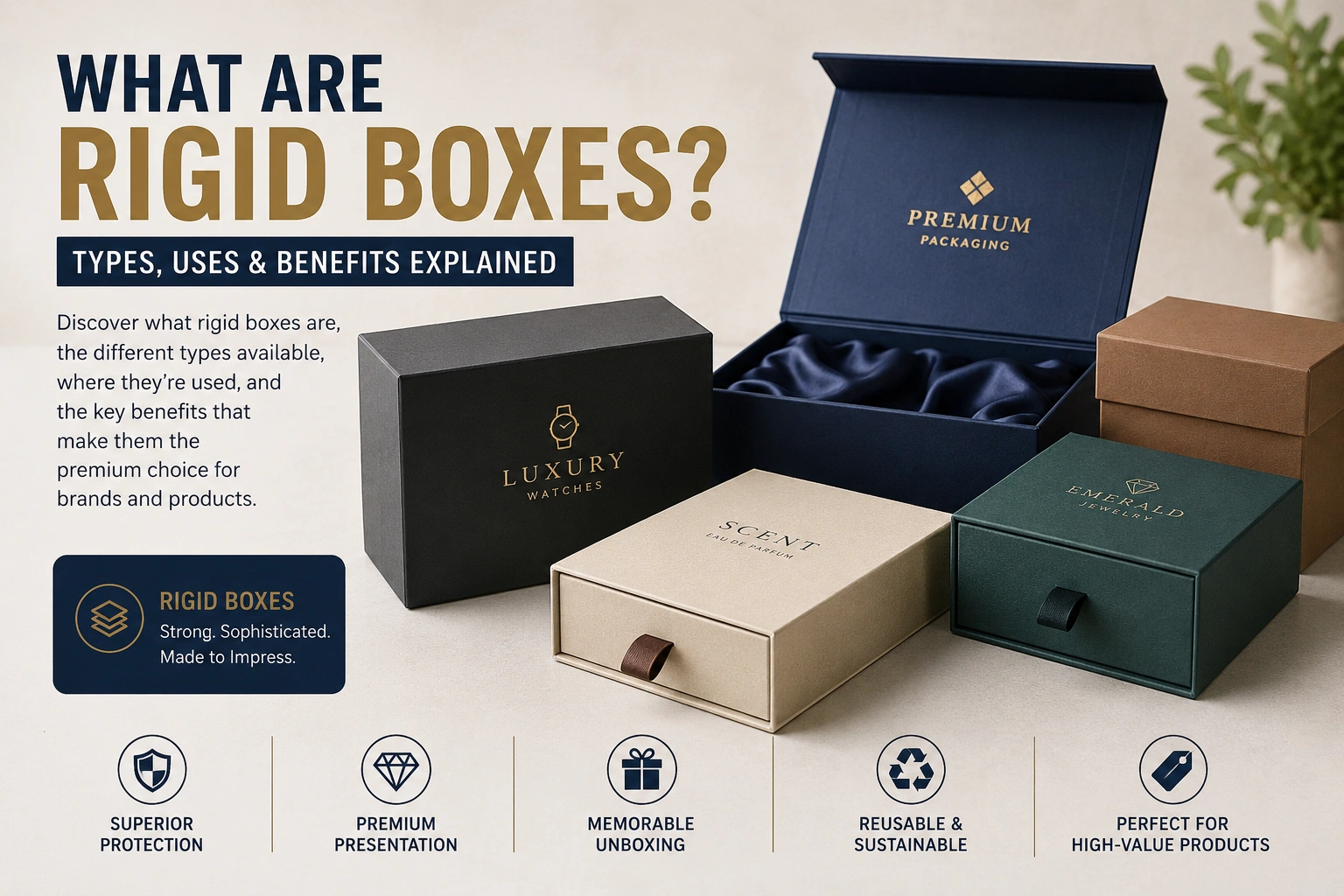
If you’ve ever unboxed a smartphone, a fragrance, or a piece of fine jewelry and felt the satisfying weight and snug “click” of the lid, you’ve already experienced a rigid box. Rigid boxes sometimes called setup boxes are the gold standard of premium packaging, built to protect high-value products while making a strong first impression. In this guide, we’ll break down exactly what rigid boxes are, the main styles available, where they’re used, and why so many brands are switching to them.
What Is a Rigid Box?
A rigid box is a non-collapsible packaging container built from thick, high-density paperboard typically chipboard or greyboard. Unlike a folding carton, a rigid box keeps its shape permanently; it doesn’t fold flat and can’t be shipped as a blank. That solid construction is exactly what gives it superior crush resistance and a distinctly upscale feel in the hand.
The board used in rigid boxes generally runs between 800 GSM and 3000 GSM, with a wall thickness of roughly 1.5mm to 3mm. That density is then wrapped in an outer material matte or gloss art paper, textured specialty paper, linen, leather-look stock, or velvet and often finished with foil stamping, embossing, debossing, or spot UV to elevate the look further.
Quick definition: A rigid box is a fixed-shape, thick-chipboard container designed for maximum product protection and a premium unboxing experience commonly used for jewelry, cosmetics, electronics, and gift packaging.
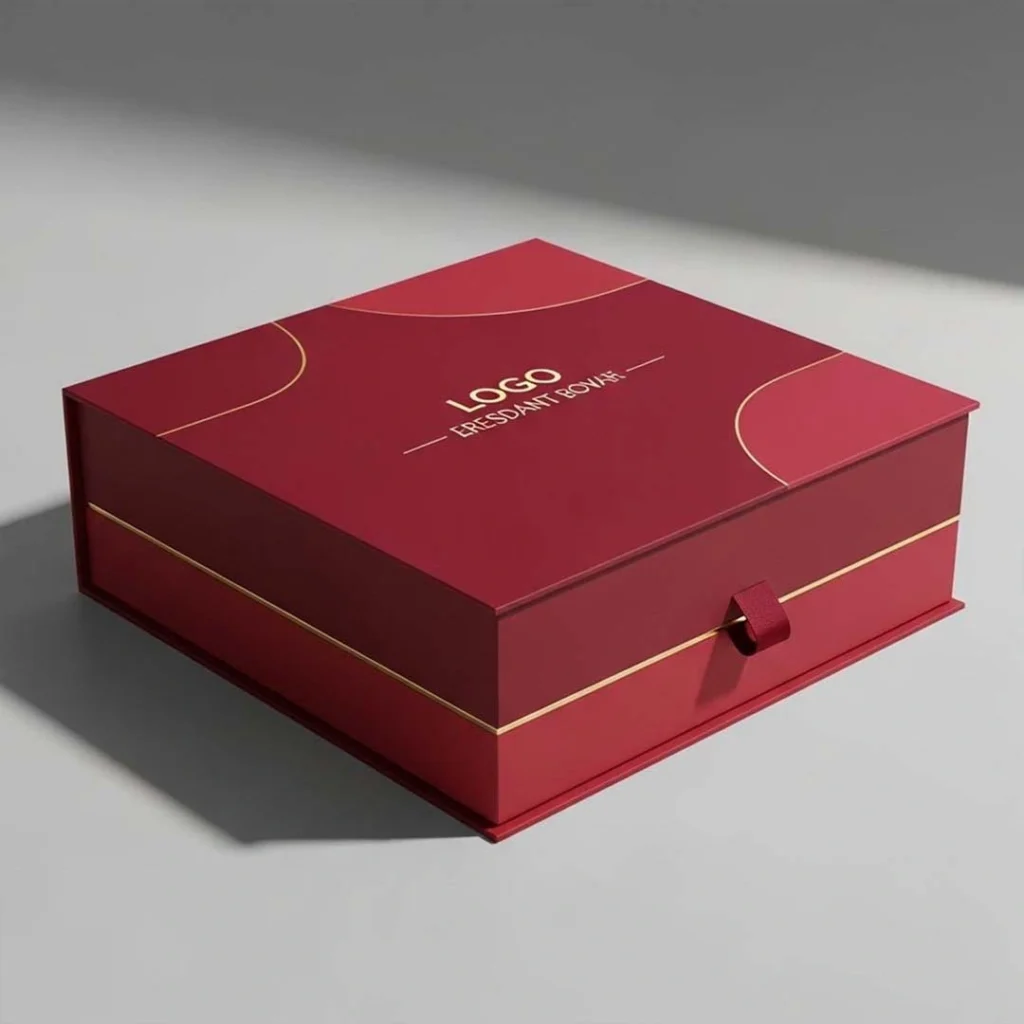
Main Types of Rigid Boxes
Not all rigid boxes are built the same way. Each style serves a different product category and unboxing goal.
| Type | Structure | Best For |
|---|---|---|
| Lid & Base (Two-Piece) Boxes | Separate lid fits over a base tray | Candles, gourmet food, gift sets |
| Magnetic Closure (Flip-Top) Boxes | Hinged lid held shut by a concealed magnet | Jewelry, watches, smartphones, cosmetics |
| Drawer-Style Boxes | Inner tray slides out of an outer sleeve | Perfume, luxury gift boxes, corporate gifting |
| Collapsible Rigid Boxes | Foldable rigid panels that flatten for storage/shipping | Apparel, subscription boxes, brands needing flat-pack shipping |
| Book-Style Boxes | Opens like a hardcover book, hinge on the spine | Premium electronics, media kits, press boxes |
Want a deeper dive into a specific style? Check out our full breakdown of rigid boxes with lids and our dedicated guide to magnetic closure boxes.
Common Uses & Applications
- Luxury & Beauty: perfume, skincare, cosmetics, jewelry, and watches
- Consumer Electronics: phones, earbuds, tablets, and accessories
- Gifting & Subscription: corporate gifts, PR/influencer boxes, subscription kits
- Food & Spirits: chocolate, artisanal treats, premium liquor
- Apparel & Accessories: designer clothing, scarves, and accessory sets
Key Benefits of Rigid Boxes
Superior Product Protection
The dense chipboard core resists crushing, denting, and impact far better than a standard folding carton, which matters most for fragile or high-value goods in transit.
Upgraded Brand Perception
Weight and rigidity are subconscious cues of quality. A heavier, sturdier box signals a more expensive, more trustworthy product before the customer even opens it.
A Memorable Unboxing Moment
Magnetic snaps, ribbon pulls, and drawer slides turn opening the box into part of the product experience the kind of moment customers screenshot and share.
Reusability
Because rigid boxes hold their shape, customers often keep them for storage long after the original product is gone, extending your brand’s presence in their home.
Sustainable Options
Rigid boxes are built from recyclable, often FSC-certified paperboard, giving brands a premium look without sacrificing eco-conscious credentials.

Folding Carton vs Rigid Box : What’s the Difference?
| Feature | Rigid Box | Folding Carton |
|---|---|---|
| Structure | Fixed shape, does not collapse | Ships flat, folds into shape |
| Material | Thick chipboard (800–3000 GSM) | Thinner SBS/paperboard |
| Perceived Value | Premium, high-end feel | Standard retail feel |
| Best Use Case | Jewelry, electronics, gifting, luxury goods | High-volume e-commerce, everyday retail |
| Shipping Cost | Higher (bulkier, heavier) | Lower (flat-packed) |
Rigid Packaging vs. Flexible Packaging
When choosing packaging for your product, one of the biggest decisions is whether Rigid Packaging Vs. Flexible Packaging is the better fit. While both offer unique advantages, the right choice depends on your product, branding goals, shipping requirements, and budget.
| Feature | Rigid Packaging | Flexible Packaging |
|---|---|---|
| Structure | Maintains its shape and does not collapse | Flexible, lightweight, and conforms to the product |
| Materials | Chipboard, greyboard, paperboard, rigid plastic, wood | Plastic films, foil, paper laminates, pouches, and wraps |
| Product Protection | Excellent crush and impact resistance | Good moisture and barrier protection but less impact resistance |
| Brand Perception | Premium, luxury appearance | Practical and cost-effective |
| Shipping & Storage | Heavier and requires more storage space | Lightweight and ships flat, reducing logistics costs |
| Reusability | Often reused for storage or gifting | Typically designed for single use, though recyclable options are available |
| Best Applications | Jewelry, electronics, cosmetics, luxury gifts, premium food | Snacks, coffee, frozen foods, pet food, powders, liquids, and everyday consumer goods |
Materials & Finishing Options
A typical custom rigid box combines three layers: a chipboard core (800–3000 GSM) for structure, an outer wrap (art paper, textured stock, or specialty material) for appearance, and an optional interior lining or insert foam, felt, molded pulp, or cardboard dividers for cushioning and presentation. Finishing options commonly include matte or gloss lamination, spot UV, foil stamping, embossing/debossing, and custom ribbon or magnetic closures.
Why it matters for your brand: The right combination of board weight, wrap material, and finish is what separates a generic-looking box from true shelf-stopping packaging and it’s usually where custom rigid boxes earn back their higher upfront cost through better perceived value and lower return/damage rates.
Get Custom Rigid Boxes Built for Your Brand
At Rigid Packaging Pro, we design and manufacture custom rigid boxes for jewelry, cosmetics, electronics, and gift brands across the US with no compromise on protection or presentation.
- Free US Shipping
- Free Design Support
- No Die or Plate Charges
- 100-Unit MOQ
- 24/7 Customer Support
- Free Prototype Approval
Ready to design your custom rigid box?
Get a free quote and prototype no die charges, no minimums headaches.
Frequently Asked Questions
A rigid box is a fixed-shape, non-collapsible container made from thick chipboard, often wrapped in decorative paper, fabric, or leather-look material. It’s prized for durability and a premium feel, and is widely used for jewelry, electronics, and luxury gift packaging.
A regular folding carton is made from thinner board and ships flat, folding into shape at the point of use. A rigid box is pre-formed from thick chipboard and never folds flat, which is what gives it far greater strength and a sturdier feel.
Rigid boxes reinforce brand value through weight, structure, and finish details like foil stamping or soft-touch lamination signal quality before a customer even opens the box. They also protect delicate, high-value items better than standard cartons and are sturdy enough to be reused, extending the brand’s presence in the customer’s home.
The core is dense chipboard, usually 800–3000 GSM and roughly 1.5–3mm thick, wrapped in an outer material such as art paper, textured stock, fabric, or leather-look paper. Interior inserts are often foam, felt, or molded pulp for extra cushioning.
Rigid boxes work best for products where protection and presentation both matter jewelry, watches, perfume, cosmetics, premium electronics, gourmet food, and corporate or subscription gift sets are the most common use cases.
Generally yes, since the thicker board, added labor, and heavier shipping weight increase production cost. That said, many brands recover the difference through stronger perceived value, fewer damaged-in-transit returns, and better customer retention.